The story
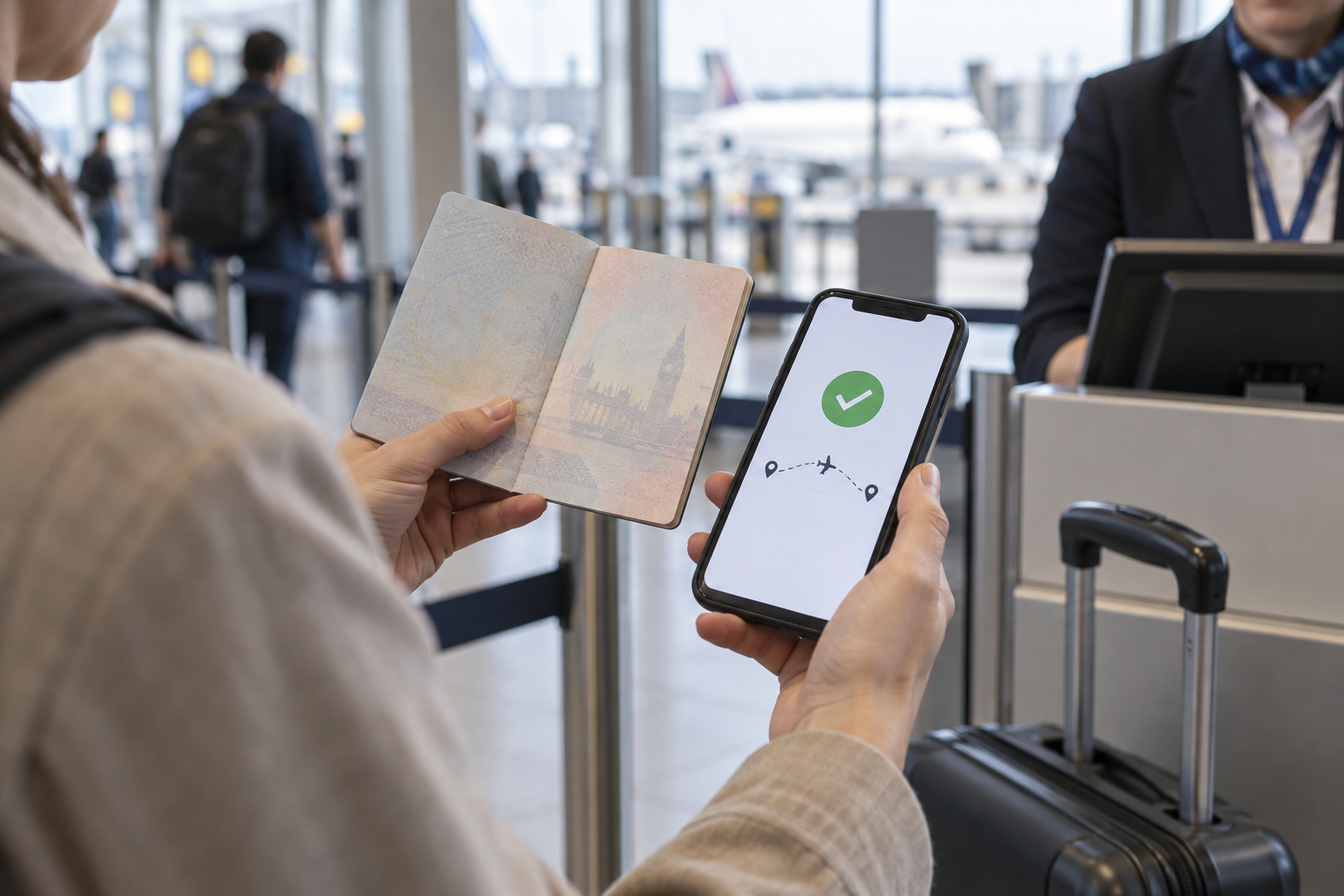
A UK carrier rule effective 22 September 2026 puts more weight on checking required travel permission before departure. It did not create a new ETA requirement for every passenger. Your passport, purpose and route still determine whether you need an ETA, a visa or another form of permission.
Last verified: 29 September 2026 · Traveler Intelligence · United Kingdom
Home Office carrier guidance, updated on 23 September, says air, rail and sea carriers may face financial penalties if a passenger who needs an electronic travel authorisation (ETA) or other valid immigration permission arrives without it. The effective date is 22 September 2026. This is a carrier-liability change, not a universal ETA rule.
Begin with the passport and the journey
Use the current UK government pre-travel guidance to determine whether your nationality and travel purpose call for an ETA, visa or existing immigration permission. The ETA nationality list does not turn visa nationals into ETA applicants. An ETA covers specified short visits and some transit, while other purposes may require a visa. An ETA is permission to travel, not a guarantee of admission, as the official ETA scope page makes clear.
If you already hold an ETA, check its status against the passport you intend to use. A replacement passport can change the practical answer at check-in because the ETA is tied to the application passport. For an eVisa or other digital UK immigration permission, make sure the document and personal details in your UK Visas and Immigration account match your journey. UKVI's carrier-status guidance explains how a traveler can provide a share code or a valid physical document with the passport if automatic verification does not work. Do this before the terminal becomes the place where a mismatch must be solved.
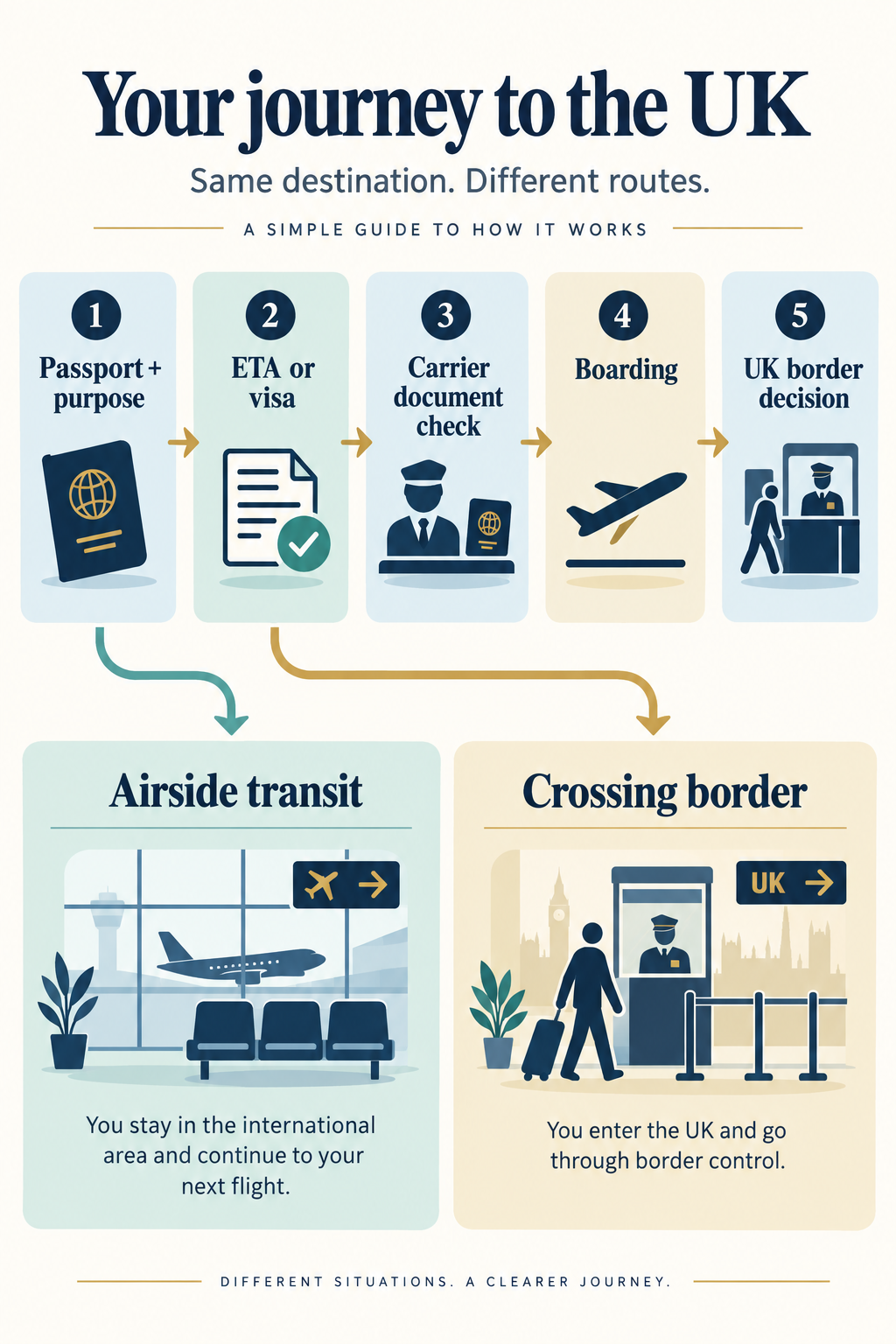
AI-generated process illustration. Airside transit without passing border control does not require an ETA; transit that passes through border control may require one, depending on the traveler’s circumstances.
A connection is not one universal exemption
The official ETA exemption guidance includes British and Irish citizens, people with UK permission to live, work or study, certain travelers from Ireland, and passengers who transit airside without passing UK border control. A connection requiring baggage collection, an airport change or another border crossing differs from remaining airside. Check your airport, tickets and baggage arrangements with the operator; an itinerary labelled “transit” does not settle the question.
For families or groups, check each person's passport and permission separately. Likewise, a carrier's decision to carry you is a boarding decision under its document-check responsibilities. Border Force still decides admission on arrival. A mismatch found only at departure can be harder to resolve.
The practical order before departure
First, confirm the permission required for your passport, purpose and route on GOV.UK. Next, confirm that any ETA or eVisa is linked to the document you will present, and follow UKVI's instructions if automated proof fails. Then verify whether a UK connection stays airside. Leave time to resolve a discrepancy with the carrier and the relevant official service before travel; the cited guidance does not establish how every operator handles a failed check or how long resolution takes. No general refusal rate or penalty amount follows from the carrier update.
Sources and scope
Official pages linked above were rechecked on 29 September 2026. The update does not establish refusal rates, a universal operator response or a penalty amount.
> Independent editorial coverage. No affiliate links, paid placement or commercial partnership.
>
> This is not immigration or legal advice: use official United Kingdom guidance for the passport and purpose of travel in question.