The story
News · South Korea · Verified 21 September 2026
South Korea's special Chuseok transport period runs from 23 to 27 September, with Chuseok itself on 25 September. The useful distinction for a visitor is not open versus closed. It is whether a fixed intercity journey is already secured, whether a route-specific alternative has been checked, and whether the trip can remain Seoul-based during the busiest flow.
Korail reported on 11 September that 1.80 million tickets had been reserved from 2.14 million supplied seats for the holiday period, an 84% advance-booking rate. That is evidence of concentrated demand, not proof that every train is full today. Cancellations, remaining seats and route-specific inventory can change. A traveler should therefore check the official operator for the exact date, direction and service rather than treating a national percentage as a live timetable.
Three calendars overlap, but they are not the same
The national special-transport plan covers five days, 23–27 September. The Chuseok holiday is 24–26 September, and 27 September extends the practical break for many travelers. Those windows explain why pressure can begin before the festival day and continue after it.
Korail's advance-booking result also shows why direction matters. It reported especially high demand for southbound travel on 23 September and northbound travel on 27 September. Route percentages varied, and some reported demand figures exceeded nominal supply. Those results describe the booking process; they do not certify a seat, standing place or wait-list outcome for a particular visitor.
The special reservation process required integrated Korail membership, but that fact should not be turned into a claim that foreign visitors are barred. Account setup, payment acceptance and available inventory are separate questions. If a rail journey anchors a flight, hotel or timed tour, confirm the booking in the official Korail channel and retain the reservation details. If it is not confirmed, compare official express-bus, intercity-bus, domestic-flight or ferry options for the same route before committing to a non-refundable connection.
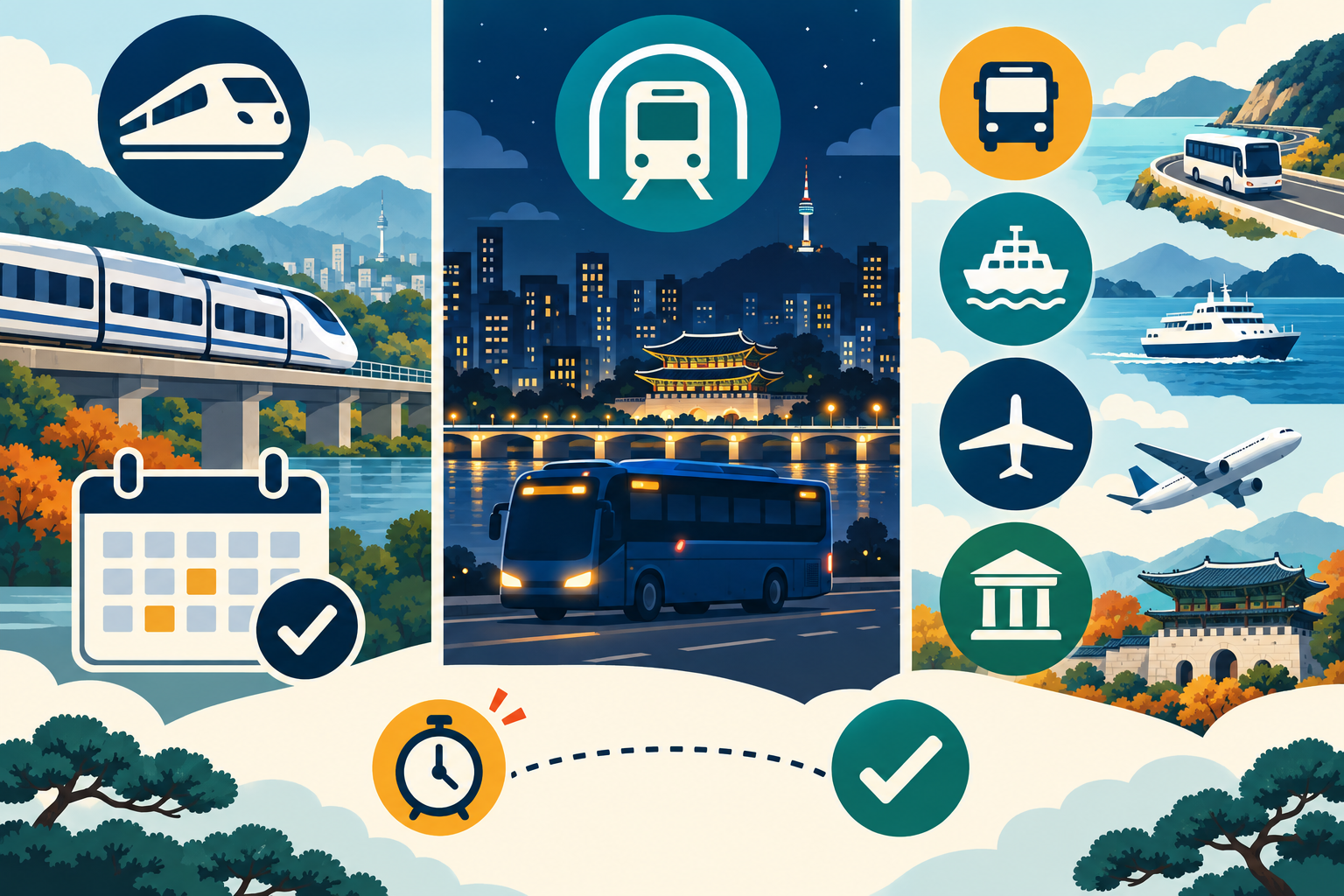
AI-generated editorial explainer. It shows categories to check and does not report live seat availability or an official timetable.
Seoul's later service helps locally, not nationally
Seoul's Chuseok plan makes a city-based itinerary more workable on 26 and 27 September. The city says 121 bus routes serving major stations and terminals will extend final trips so that they reach those points at around 01:00. Fourteen night-bus routes continue their normal operation, while subway lines 1–9, Ui-Sinseol and Sillim receive extra late service with final trains reaching terminal stations around 01:00.
That is useful after a late arrival in Seoul, but it is not a substitute for an intercity seat. “Service until around 01:00” also does not mean every station has a departure at that time. The boarding station, direction and last practical interchange still need checking in the city's current journey planner.
The same boundary applies outside Seoul. Incheon, for example, announced location-specific bus increases and a 23–27 September transport situation room. Local additions can ease part of a journey without guaranteeing the long-distance leg that feeds it.
The safest plan protects the fixed connection first
For a trip with an unsecured regional leg, work in this order:
1. Check the exact date and direction in the official rail or bus channel. Do not rely on a screenshot of the 84% national result.
2. Protect the least flexible connection. A same-day international flight, prepaid regional hotel or ferry requires more margin than an optional day trip.
3. Verify the whole alternative. A bus seat is not a complete backup unless its terminal, local transfer and realistic road-time buffer also work.
4. Keep a Seoul-based version of the day. Move regional sightseeing outside the peak window when the itinerary allows it.
5. Recheck the venue itself. The Korea Tourism Organization warns that attraction, restaurant and shop hours vary; major museums may close on Chuseok Day while some cultural sites and events operate.
This approach avoids two bad assumptions. The first is that Korea shuts down for foreign visitors. It does not. The second is that a special transport plan guarantees normal mobility. It does not do that either; it coordinates additional capacity and safety measures during unusually concentrated demand.
Weather, incidents and operator updates can still change rail, road, air and ferry plans. The closer a journey is to departure, the more important the official route-specific notice becomes. A flexible Seoul day can absorb that uncertainty. A chain of fixed intercity connections usually cannot.
Sources and evidence status
> Independent editorial coverage. No affiliate links, paid placement or commercial partnership.
>
> This is not immigration or legal advice: use official Korean transport operators, local authorities and venue notices for the journey in question.