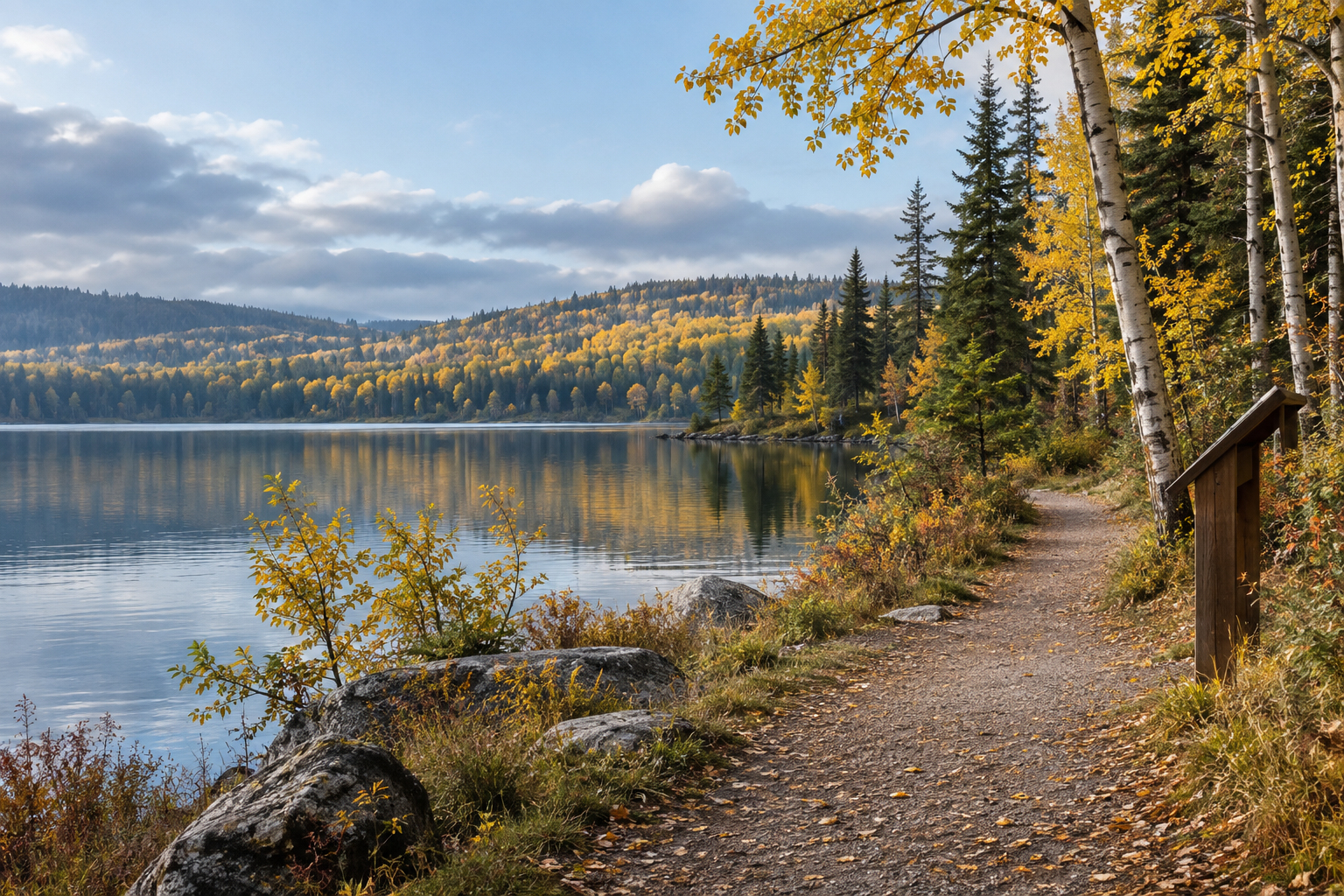
The story
Experiences · Canada · Verified 17 September 2026
Riding Mountain National Park is still workable for a fall visit, but it is no longer a summer-style, arrive-anytime trip. Parks Canada says regular admission and camping rates returned on 8 September, some services are reducing, the North Entrance Gate is already closed for the season, and seasonal roads can close early when weather demands it.
The practical answer is to decide what your visit needs before you leave: a same-day stop around Wasagaming, or an overnight stay that can absorb a road, service or weather change. Quieter trails and cool evenings are real advantages; treating the park as fully summer-ready is the trade-off.
The fall calendar changes the trip
Parks Canada's current Riding Mountain visitor update says the Visitor Centre is open daily from 8 September to 12 October, while the South Entrance Gate is open Wednesday through Sunday through 4 October. The North Entrance Gate is closed for the season. Those details do not close the park, but they change how a visitor should plan a late-season arrival.
The agency also says seasonal washrooms, day-use areas, services and roads begin to reduce in fall. All seasonal roads are expected to close by 31 October and can close sooner because of weather. Backcountry campgrounds remain bookable year-round through the Parks Canada Reservation Service, but access roads may close seasonally and sites are not regularly monitored.
The reasonable objection is that a quieter park should make a spontaneous trip easier. It can—if your plan stays close to the services that are actually open. It is less true for a drive designed around a remote road, a specific day-use area or a late arrival through a gate with limited hours.
Pick the shape of the trip before the route
For a day trip, build the plan around a confirmed entrance, a short list of open services and a trail or lakeshore stop that does not depend on a seasonal access road. For an overnight, the value is not merely extra time: it is room to respond if weather, daylight or an operating change narrows the options.
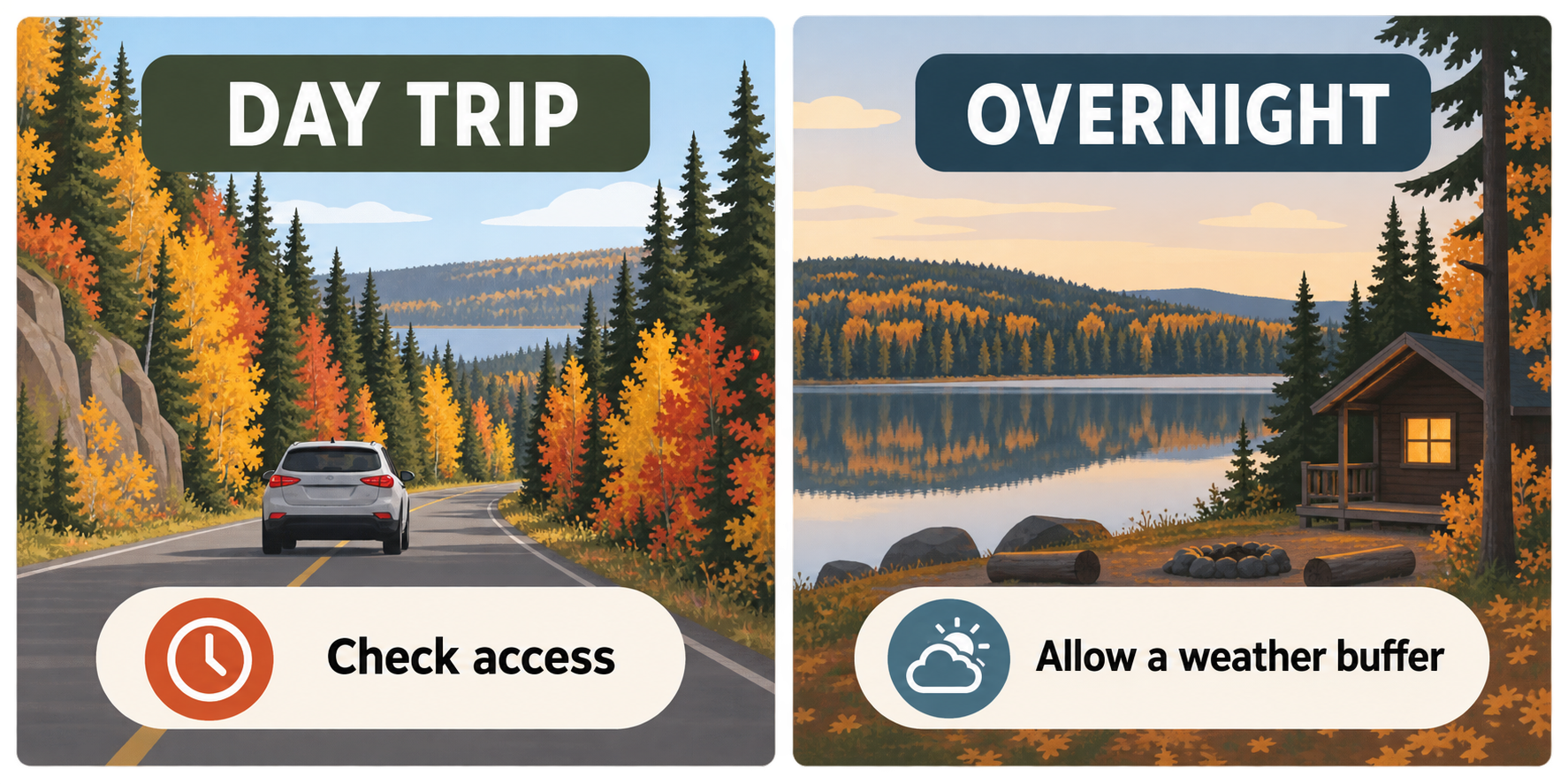
This comparison is not a claim that every day trip is rushed or that every overnight is better. A visitor with a flexible schedule and a confirmed route may prefer the shorter option. The key is to avoid making a fixed plan around conditions that the park says can change seasonally.
What to check on the morning you travel
Parks Canada asks visitors to check current trail conditions and closure information, download maps and avoid relying on cell service. That is especially important after the seasonal transition begins: the published fall update gives broad operating dates, but it does not guarantee a particular road, trail or facility on a particular day.
For water activities, the park says watercraft need inspection and registration before launch. For driving, check road conditions immediately before departure and carry enough water, food and warm clothing for a longer-than-planned stop. These are ordinary outdoor-travel basics, yet they become the difference between a calm fall visit and a trip built on an outdated summer assumption.
The question that remains unanswered is how quickly each seasonal reduction will affect a specific itinerary. Parks Canada publishes the direction of travel, not a single all-park closing moment. That makes the most useful fall plan a modest one: choose an area, confirm the live conditions, and leave a buffer instead of chasing a long checklist.
Sources and evidence status
> Independent editorial coverage. No affiliate links, paid placement or commercial partnership.
>
> This is not immigration or legal advice: use official Canadian guidance for the passport and purpose of travel in question.