The story
Screen Travel · Ireland · Verified 16 September 2026
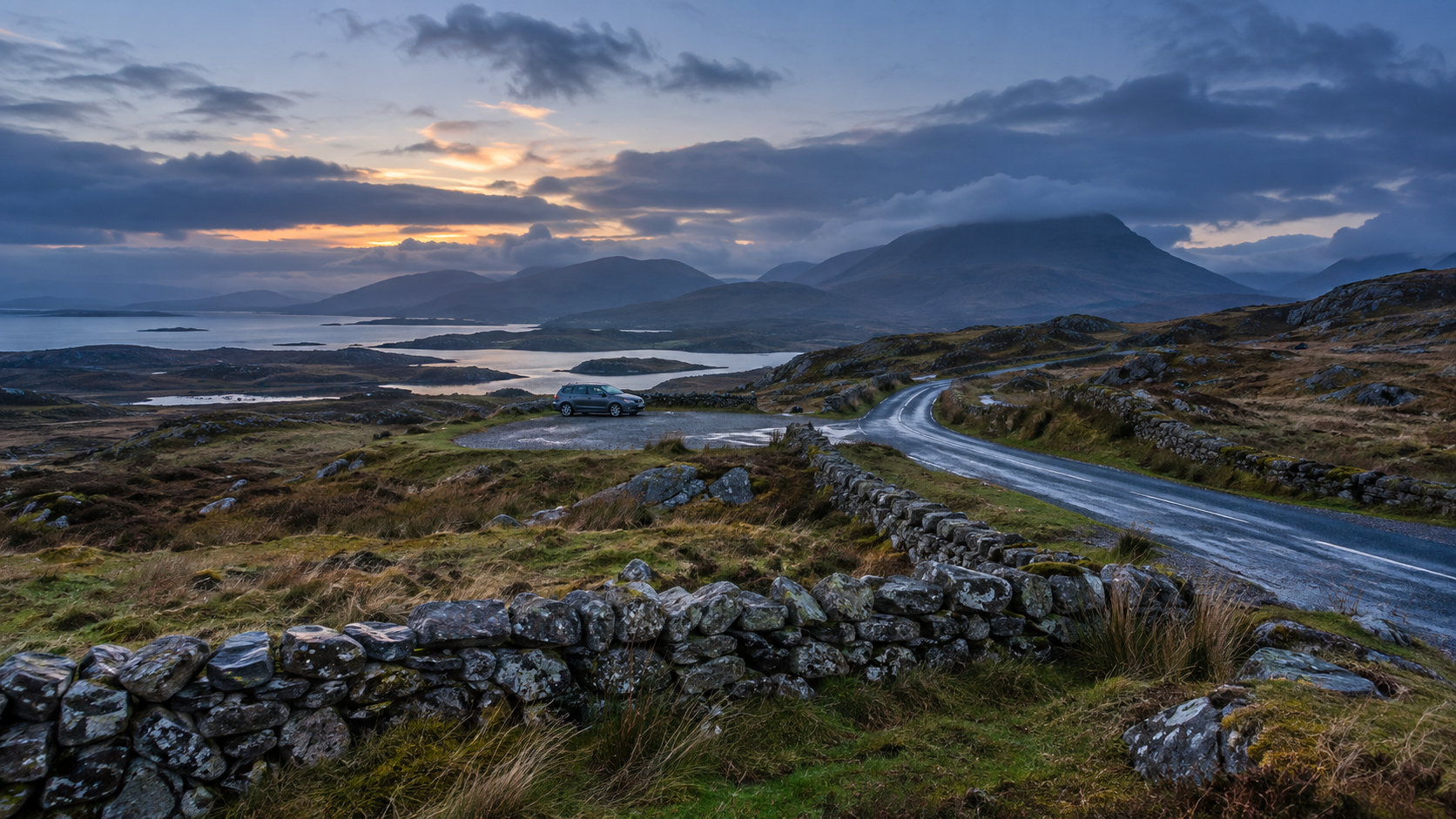
Ireland’s current screen-tourism campaign gives travellers plenty of reasons to look beyond Dublin, from Wicklow and Kerry to Connemara and locations across the north-west. The practical question is not whether those landscapes are worth seeing. It is whether a film-location trip works better as a regional stay than as a rushed attempt to collect scenes across the island.
For most visitors, the stronger plan is to choose one region, confirm that each stop is publicly accessible, and leave room for weather and ordinary local life. A screen connection can open the door, but it does not shorten the roads, turn private property into an attraction or guarantee that a location will resemble what appeared on screen.
The campaign is broader than a list of famous scenes
Tourism Ireland’s screen-tourism page links 2026 promotion to productions associated with Wicklow, Kerry, Dublin, Belfast, Derry-Londonderry and Donegal. Its wider business plan describes screen tourism as one way to encourage visits that spread across regions and seasons while respecting communities and place.
That ambition matters. A visitor who stays longer in one area can use accommodation, food, guiding and cultural services that receive little value from a quick roadside photograph. It also creates time to see the landscape as a working place rather than a backdrop.
The strongest argument for screen tourism is therefore not scene recreation. It is discovery. A film or series can give travellers a reason to notice a region they might otherwise skip, and regional interpretation can connect that recognition to history, landscape and local businesses.
Connemara offers a test of the idea
Fáilte Ireland’s Connemara Film Trail brings together 17 locations associated with 11 productions. The destination authority says the trail was designed to encourage deeper exploration, longer stays and off-season visits.
Those are stated aims, not proof of economic impact or resident approval. The number of locations also should not be read as a challenge to complete every stop. Public access, opening arrangements, parking, photography rules and weather can differ from place to place. Some recognisable landscapes are working land or sensitive environments rather than managed attractions.
The useful way to read the trail is as a menu. Pick the stops that fit a single base and combine them with experiences that would still justify the journey without the screen connection. If a location is inaccessible or unclear, leave it out.
Distance is part of the story
Independent itinerary discussions repeatedly warn travellers against packing distant Irish regions into a short road trip. These are self-selected reports rather than a measurement of average driving time or visitor satisfaction, but the recurring concern is credible: a route that looks compact on a small map can become tiring once narrow roads, stops and changing weather are included.
A screen itinerary that jumps from Dublin to Wicklow, Kerry, Connemara and the north-west may cover several jurisdictions and very different transport conditions. Travellers crossing between Ireland and Northern Ireland should separately confirm travel-document, car-hire and insurance requirements. No tourism campaign removes those checks.
This is where the promotional promise and the real journey can diverge. Marketing can distribute attention beyond a capital city, yet an overfilled itinerary may leave less time and spending in each place. The visitor gets a collection of photographs; the region gets traffic without much engagement.
Build the trip around a place, not a frame
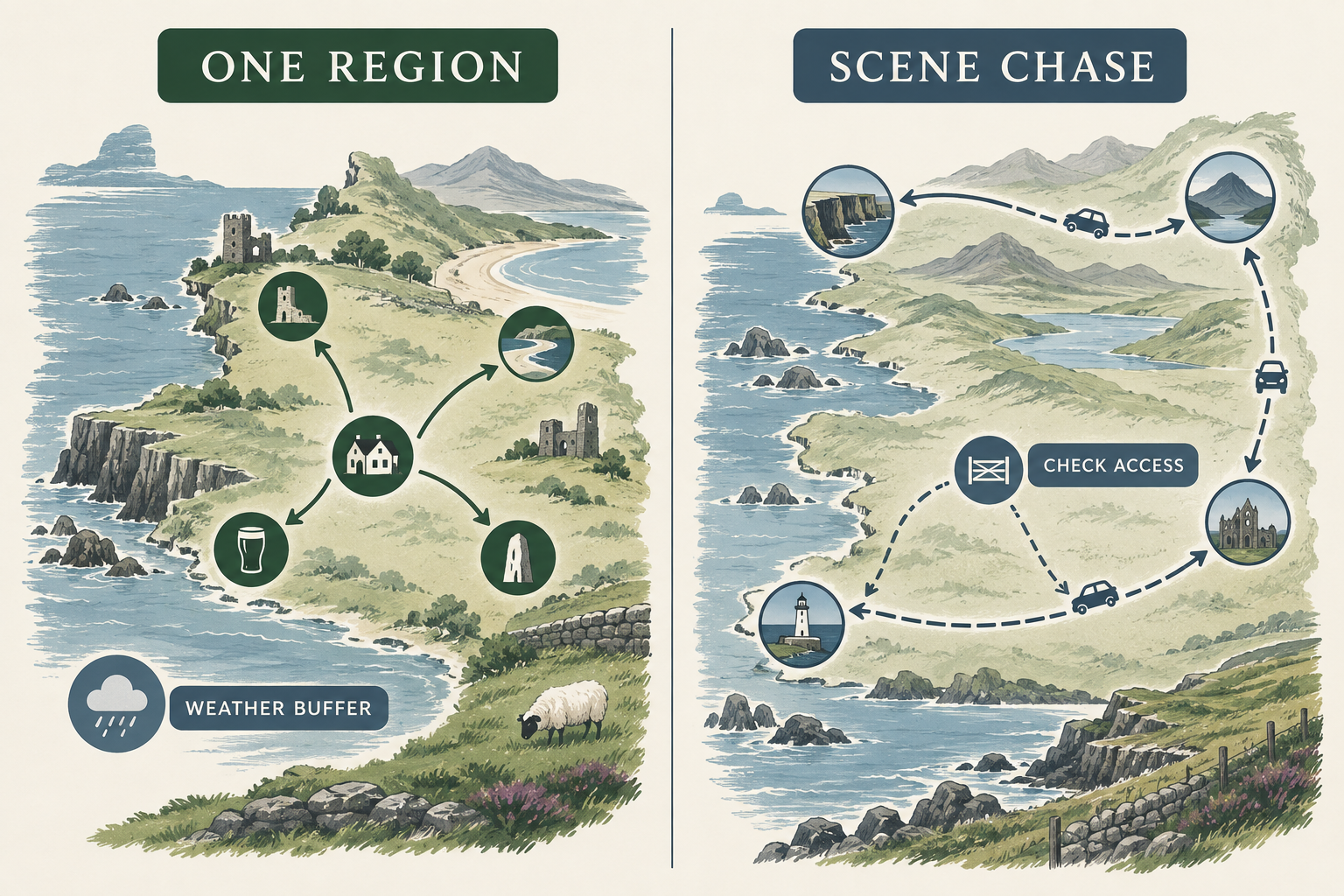
A practical screen-tourism trip begins with four questions: Is the location publicly accessible? Does it require a booking? What happens in poor weather? What else nearby makes the stay worthwhile?
Choose one regional base, verify access through the relevant attraction, land manager or destination authority, and add a weather buffer. Treat exact scene matching as optional. The landscape, town or cultural setting should carry the day even when light, season or production design makes the location look different from the screen.
The unanswered question is whether the 2026 campaign will measurably spread visitor spending or reduce pressure on familiar hubs. The official material establishes the intention, not the outcome. Until evidence arrives, the sounder claim is modest: screen stories can redirect curiosity, but travellers decide whether that curiosity becomes a respectful regional visit or another hurried checklist.
Sources and evidence status
> Independent editorial coverage. No affiliate links, paid placement or commercial partnership.
>
> This is not immigration or legal advice: use official Irish and UK guidance for the passport and purpose of travel in question.