The story
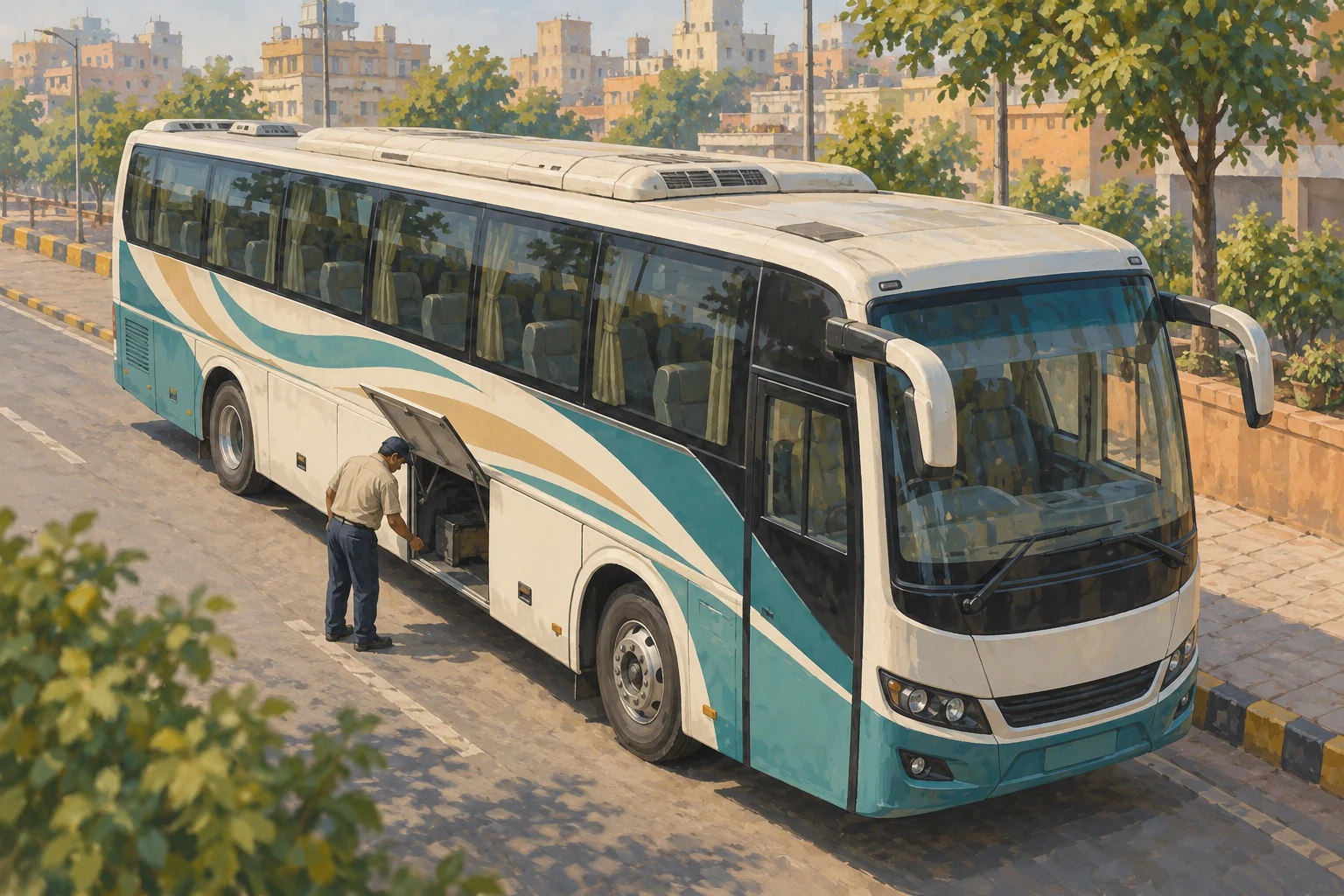
If your North India itinerary enters Delhi by tour coach from 1 November 2026, ask about the actual bus before confirming the trip. Under the Commission for Air Quality Management's (CAQM) Direction No. 93, covered incoming buses must be CNG, electric or BS-VI diesel. Delhi-registered buses are excepted. An All India Tourist Permit alone does not establish the vehicle's fuel or emissions standard.
The rule is a transport-access check for a Delhi–Agra–Jaipur itinerary or a wider North India route. It does not itself change a visitor's visa, personal-car eligibility or attraction access. Nor does a qualifying coach guarantee clear traffic or acceptable winter air quality.
The vehicle matters more than the tour label
Direction No. 93, dated 3 June 2025, sets the 1 November 2026 requirement and includes buses operating under All India Tourist Permit and other listed service regimes. The government's accompanying explanation confirms the listed modes and Delhi-registration exception. A general claim that a fleet is “cleaner” is less useful than identifying the assigned coach as BS-VI diesel, CNG or electric.
Ask the operator which vehicle will carry the group, where it is registered and which listed mode it uses. Also ask how the replacement will be checked if the coach changes. These are practical booking questions derived from the direction; the checked sources do not provide a passenger certificate or a public list of compliant operators. The exception for Delhi-registered buses is explicit, but its operational treatment across every listed service regime is not explained in the material checked.
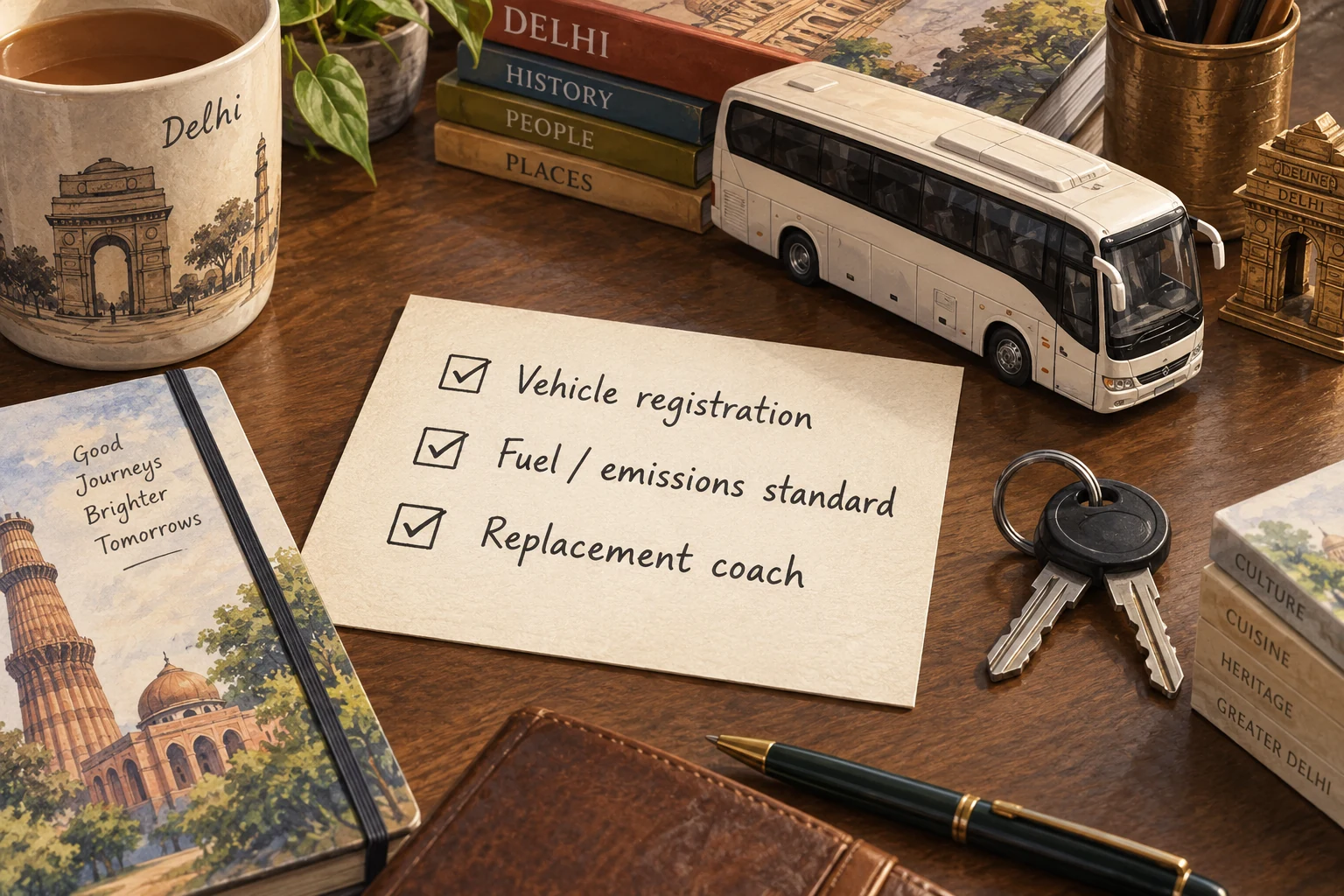
AI-generated conceptual illustration. The checked boxes are illustrative only; they do not show that a real coach meets any entry standard or serve as an official certificate.
Preparation is confirmed; the passenger process is not
CAQM reviewed implementation preparedness at its 29 September meeting, according to a PIB report published on 30 September. That establishes current enforcement attention. It does not show that every operator has completed fleet changes or that every entry point follows a settled passenger-facing process.
The direction instructs Delhi's Transport Department and Traffic Police to use an appropriate mechanism, such as automatic number plate recognition (ANPR) or radio-frequency identification (RFID), at border entry points. The official sources checked do not set out a border-by-border operating workflow or what passengers would need to show. Ask the operator to recheck entry guidance close to departure rather than treating a booking assurance as a guarantee.
A separate winter restriction can still matter
The revised Graded Response Action Plan (GRAP) schedule announced on 29 September moved the bus-entry action concerning BS-IV-and-below buses from NCR and adjoining states from Stage-II to Stage-I. This is a conditional, stage-based layer, separate from Direction No. 93's dated requirement. Check the active GRAP stage for the travel date. Earlier Direction Nos. 78 and 81 also remain separately binding for intercity public-transport buses to Delhi-NCR.
The strongest reason not to abandon a Delhi stop is that an operator may already use a listed cleaner mode. The stronger booking precaution is to establish that before locking the route. A substitution, transfer or schedule change is conceivable if a booked vehicle cannot enter, but the checked official material does not establish fare rises, cancellation volumes, fleet shortages or journey-time effects. Those possibilities should remain questions for the operator, not predictions sold to travellers.
Official sources checked: 5 October 2026.