
The story
The $37 one-day Angkor pass is enough if your Siem Reap plan is one focused temple day. Choose the $62 three-day pass if you want more time for the Small and Grand Circuits or room to spread visits around rest days. All passes provide the same temple admission access; the extra $25 buys time and flexibility, worthwhile only if your itinerary can use it.
Prices and rules were checked on 16 October 2026. Recheck Angkor Enterprise’s official listing before payment. These are entrance-ticket prices: transport, guides, food, accommodation and other trip expenses cost extra.
What each pass buys
The official ticket listing shows $37 for one day, $62 for three days and $72 for seven days. Their listed expiry windows are one, seven and 30 days respectively. A three-day pass therefore does not mean three consecutive calendar days: it provides three visiting days within a seven-day window.
The official FAQ says tickets include access to all temples within Angkor Archaeological Park. Its circuit lists are recommended itineraries, not admission restrictions. The FAQ’s suggested one-day Small Circuit includes Angkor Wat, Bayon, Ta Prohm and Srah Srang; it is not mandatory. The longer-pass suggestions add the Grand Circuit, including Preah Khan, Neak Pean, Ta Som, East Mebon and Pre Rup.
The listing describes “50+ accessible temples.” Neither that wording nor the FAQ’s all-temples access statement promises how many you can visit. Choose your pass by available time and preferred pace.
When the extra $25 makes sense
Choose one day when your priority is a focused visit and you have no intention of returning. The Small Circuit is one suggested plan. A one-day pass also permits Grand Circuit admission, but the official sources do not establish how many temples you can comfortably fit into that day.
Choose three days when you want more time across the circuits, separate visiting days or a rest day between outings. Its seven-day expiry window creates room to adjust your plan. If your Siem Reap stay allows only one temple day, however, unused visiting days do not become savings. The $72 seven-day option has a 30-day window, but is not automatically better value simply because it costs only $10 more than the three-day pass.
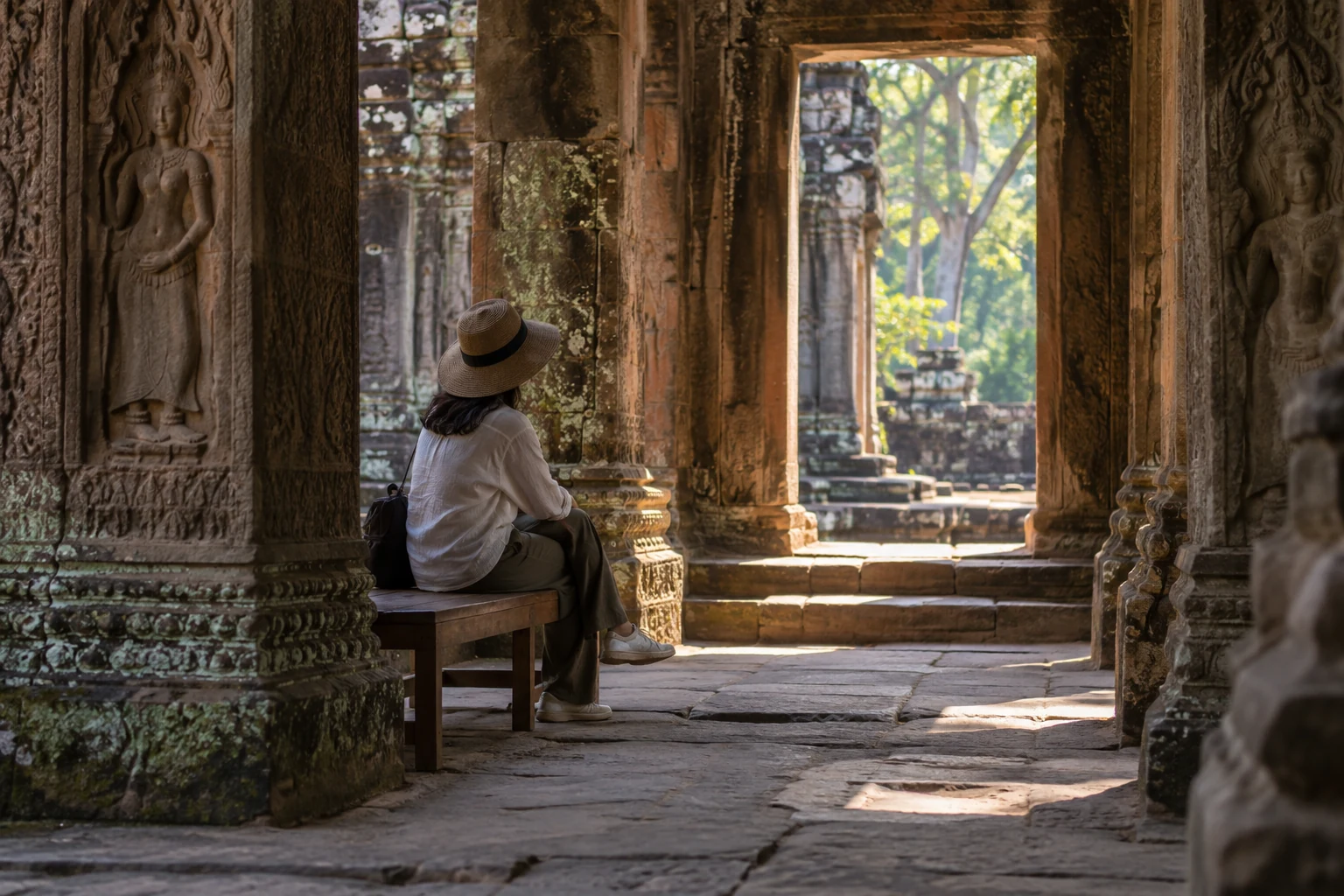
AI-generated conceptual illustration: one adult seated on a wooden bench in a shaded carved-stone courtyard; it does not document current conditions.
Sunrise and the previous-evening exception
The ticket listing gives park entry hours as 5:00 AM to 6:30 PM. Those hours alone do not guarantee sunrise access at a particular temple, weather or site availability.
The FAQ’s sunset exception is specific: a ticket purchased after 4:45 PM for the following day may also be used for sunset that evening, followed by the next day’s full validity. Do not treat this as unrestricted extra validity or assume it applies to every purchase channel.
Buy through official channels and visit respectfully
The official ticket listing links to Angkor Enterprise’s authorized online ticket portal. Its security notices warn about fraudulent websites. Verify the URL before paying.
One-day tickets do not require a photo; three-day and seven-day tickets do, according to the official FAQ. Children under 12 are exempt from entrance fees, although a passport may be requested to verify age, according to the FAQ.
Angkor is a sacred site. APSARA’s visitor guidance asks visitors to wear appropriate clothing, avoid touching or climbing monuments, take litter away and not give money to children. Its official visitor map is available in Khmer, English, French and Chinese—use it to plan your route and pace before choosing a pass.